Ancient Patterns and the Latter Days: Part 2

The following is part 2 of a series of screen shots shared from an anonymous friend on allstandtall.blogspot.com. I found it so incredibly insightful and filled with inspired connections that I decided to share and retype it here. I hope to learn who to thank and give credit to for their years of study.


Two Lonely Chambers

About 2,000 years ago, all through the night of The Day of Preparation on Aviv 14 (Tuesday night on a pagan calendar), Yeshua BenElohim had suffered through illegal court proceedings: a mock trial. Contrary to their own laws, the Jewish officials had held a trial in the night hours. The former Cohen Gadol (high priest) Annas, was complicit, as was his son-in-law, Caiaphas, the current Cohen Gadol. The latter was considered by the people to be Cohen Gadol in name only, given that Rome had forcibly stripped Annas of the office for imposing Jewish law without authorization. This night, the two leaders of the Sanhedrin even went so far as to entice men to be false witnesses in the trial, which was in direct violation of the Torah – “Thou shalt not bear false witness against thy neighbor!” It was poetic justice then that no two of these bumbling witnesses could manage to give a similar testimony detailing Yeshua’s supposed crimes.

Later that morning in the second and more legitimate session of the trial, Caiaphas restrained himself from pulling his hair out in front of the entire council, attempting to wrap up the proceedings as quickly as possible – there was a rehearsal to see to! Already on shaky political ground with the people, he refused to be responsible for neglecting such an important duty! Although Yeshua the upstart Himself confessed, of sorts, to claiming to be the Son of Elohim, one could not be convicted of a capital offense based solely on his own testimony. Those blasted blundering “witnessess”!

Soon after the council hastily announced that His crimes were worthy of receiving the death penalty Yeshua was shunted over to the Roman procurator in charge: Pontius Pilate. Let Yeshua be HIS problem now.

That morning, still Aviv 14 (a pagan Wednesday) the Cohen Gadol crossed the bridge from Jerusalem, eastward over the Kidron Valley to the Mount of Olives. The Cohen kept his composure as the usual crowds followed him and his priests to witness the next rehearsal for the preparation of the Feast of Unleavened Bread. The rabble gathered around the aviv (ripe) barley fields on the Mount of Olives.

This morning on Aviv 14 was the time to publicly prepare for the upcoming Bikkurim: The Feast of the Offering of the First-fruits. This feast would take place on the day immediately following the shabbat (sabbath) after Pesach – thus the date was never fixed. THIS year, the weekly shabbat (Friday night to Saturday night) would be on Aviv 17. That would mean the Bikkuim would begin after sundown on Aviv 18 (a pagan Saturday night).

The priests carefully prepared ten omer/shocks of the barley by wrapping them with the cordons. The future Bikkurim, the offering of the first -fruits to God, had now been marked out among the rest of the spring harvest. This year, that would mean these ten special shocks would wait 3 1/2 days for harvesting.

All the Hebrew inhabitants and visitors in Jerusalem now scrubbed themselves clean in the Mikva (baptism/cleansing) pools south of the city. They washed, stretched, and dried their garments in preparation for the seven day Hag Matzot – Feast of Unleavened Bread. The cohenim did the same on the Temple Mount after carefully inspecting themselves in the enormous Brazen Lavar sitting just outside the temple. A cohen was to scrutinize his image in the shining brass, then clean every speck of dust, animal blood, or grime he could find. one was to be completely cleansed of any impurities for the Passover – which would begin at sundown, the beginning of Aviv 15.

Satisfied that they were completely ritually cleansed, the temple priests scurried over to where Pilate sat in his judgement at the northern section of the Temple Mount. Unwilling to render themselves unclean by entering a pagan edifice, the eager accusers debated with Pilate outside on the patio. This Roman obviously had no stomach for doing what needed to be done. “I find no fault in him!” he shouted in frustration. At that same moment, Caiaphas, obligated by his duties as Cohen Gadol, stood a short distance away. Upon the final inspection of the special lamb from Bethlehem, the cohen shouted the usual proclamation, “I find no fault in him!”

In the end, the Sanhedrin had its way. Yeshua BenJesef was to be publicly executed in the pagan manner – hung on a giant “T” which stood for the pagan son-god Tammuz. A fitting end for the blasphemer.

On the day of Aviv 14, Yeshua BenElohim Mashiach, burdened with carring the very timber of His sacrifice on His own shoulders, walked the VERY PATH that Isaac BenAbraham had walked over 2,000 years before. Both men carried their own sacrificial wood to the site Abraham named “Yehovah Yehirah,” Jehovah provides. But unlike Isaac, this Ram whose symbolic horns of authority were entwined in thorns, would not be exonerated.

Up above in the opposite direction of Yeshua’s path outside the southern gate of the city. Caiaphas the Cohen Gadol stood at the brazen alter covered in innocent blood, slaughtering lamb after lamb after lamb in order to allow the thousands of families to get their Pascual lambs in the ovens before sundown. This was tiring work, despite the unusual dark skies for this time of year.

After slaughtering the last of the publics’ lambs, Caiaphas took hold of the Pascual lamb and performed the sacrifice just before sunset. Directly afterward, he uttered the words of the rehearsal/shadow-picture, “I thirst!” As he wiped his sweaty brow, he was given a sip of water. Down below at the same time, The Lamb said, “I thirst,” and was given a sip of vinegar.

Immediately after, Caiaphas proclaimed the next part of the rehearsal, “IT IS FINISHED!” as Yeshua filled his aching lungs and proclaimed, “IT IS FINISHED!” Yeshua immediately sank down, having voluntarily given up the ghost. The sacrifice had been made, Jehovah had provided. Yehovah yehira.

The skies already menacing, suddenly crackled with thunder and lightening. A massive earthquake rent the ground, splitting the rocks and soil all throughout the land, leaving huge cracks thereafter. Even many graves of the righteous dead had been opened in the tumult. These deceased saints in the ancient cemetery on the Mount of Olives were marked as a special selection as they still slept within. The ten specially selected omer of barley waved in the breeze on this mount, patiently waiting for the harvest soon to come.

Shaken, literally and figuratively, the Romans in charge went about their next duty. It takes about a week for death to find its victim on the dreaded “T” for Tammuz. Respecting Jewish laws, the Romans went to break the legs of the three convicts in order to allow their loved ones enough time to handle the bodies before the sun went down (this time, Aviv 15 would occur at sundown on the pagan Wednesday night) for executions were strictly prohibited during the Holy Convocations/Feasts: the Miqra of Yehovah.

After breaking the legs of the criminals on either side of Yeshua with a 65 lb. steal bar, the battle-hardened soldiers were aghast to find Yeshua to already be dead! Not really able to believe it, one took a spear and thrust it into Yeshua’s side, hitting His spleen. The damage caused by the crucifixion caused both blood and water to gush from the organ. These fluids spilled out and went down a fresh crack in the earth next to the cross. Yeshua’s bones remained unbroken – fulfilling yet another prophesy.

Yeshua’s body was hastily yet lovingly wrapped and placed in a beautiful borrowed tomb just outside Gethsemane. This heartbreaking task was completed just in time to allow those handing Him to be able to Mikva afresh for the Pesach seder (feast/meal). A thorough preparation for burial would have to wait until the spices could be prepared and a sabbath (either weekly or special) would not be violated.

Just as the massive stone covering Yeshua’s lonely tomb rolled shut, Caiaphas the Cohen Gadol finished up his meticulous Mikva and sequestered himself alone in a room on the Temple Mount for this year’s require 3 days of confinement. NO one was to see or speak to him, for he was to remain 100% ritualistically pure until the Wave Offering. At least this year it was only to be 3 days. It could be up to double that!

Caiaphas sat in solitude, unsure of whether he was relieved or uneasy about the fate of that troublesome Yeshua BenYosef…

The Bikkurim Rise with the Son

…On sundown Aviv 16 (Thursday evening for pagans) Yeshua had been dead for just over 24 hours. The next morning (Friday) of Aviv 16 as the shops opened the women closest to the Master, having left His body unprepared for burial by necessity a day and a half before, busily procured the necessary spices. The distraught women spent the entire rest of the day preparing these spices, for their Master deserved a proper burial.

The process took many hours, so the women sighed resignedly as the sun went down, beginning the weekly Shabbat (Sabbath) during the seven day Feast of Unleavened Bread. The resting body of the Messiah would have to wait one more day.

The weekly shabbat on Aviv 17 would be over at sundown (Saturday evening). The priests watched expectantly for the last sliver of the sun to disappear beyond the horizon, some holding implements for the harvest. Caiaphas the Cohen Gadol (high priest) had only one more night to pass in solitude before he could emerge to perform the Wave Offering in the temple.

The signal given that the sun had gone (beginning Aviv 18), the cohenim, followed by many Israelites, crossed the bridge from Jerusalem to the Mount of Olives to the east. They easily found the 10 marked omer (shocks of barley) in the dark, which had been bound ahead of time: 3 1/2 days before on the morning of Aviv 14.

The crowd looked on as a priest began the rehearsal script, “Has the sun set?”

The other cohenim replied, “Yes, the sun has set!”

“Will you harvest the barley?” shouted the first priest.

“Yes, we will harvest the barley!”

“With a sickle?”

“Yes, with a sickle!”

As the sickles were raised, the first priest would then ask, “Will you put it in this basket?”

“Yes, in this basket!”

The public then watched as the priests went about harvesting the special 10 omer of ripened barley, white and ready for the harvest.

It was late as the reapers and witnesses crossed back over to the Temple Mount with their baskets of ripened barley. The people separated from the priests and went home to bed. One of Yeshua’s closests friends, Mary, could hardly sleep during those few night hours before she could finally get to the tomb to care for her Master’s body!

Back on the Temple Mount, the priests began a long night of processing the grain. As they waved it around up on Mount Moriah, the wind blew the useless bits (chaff) clean off the stalks. The cohenim would gather the chaff in the morning and burn it. Exhausted, the cohenim finally put the prepared harvest safely aside to be inspected by the High Priests in the morning.

In the dark of the early morning hours, still on Aviv 18 (Sunday morning for the pagans), the day of Bikkurim or Feast of the First-fruits, the first person in the history of man to be resurrected awaited His friends arrival. Unbeknownst to Mary, her Lord had no more need of the burial preparations. Their greeting, though joyous, was a bit restrained, given the Master’s inability to have His purification tarnished by human hands before He presented His Father with the first-fruits of Their labors. But He knew He would soon return to embrace His cherished loved ones.

Soon, the city of Jerusalem was awestruck by the arrival of many righteous dead who had crossed the bridge from the Mount of Olives! Only – these were no longer dead! These resurrected beings spoke to many – they said wondrous things! It was a public witnessing of the reaping of the first-fruits. All too soon, the specially chosen saints were called by the Master to gather unto Him.

Over on the Temple Mount, the Cohen Gadol finally emerged from his sequestration to perform the Wave Offering of the First-fruits. He gathered the stalks of ripened barley and waved them in the temple’s Holy Place (where the menorah and other sacred implements resided), proving to The Almighty that these were pure and free from chaff. As he did so, the Bikkurim of flesh and blood gathered to the true Cohen Gadol and were taken up to Heaven by Him. He then presented them to His Father, in the heavenly throne-room: the Bikkurim – the offering of the first-fruits was now complete.

The Final Countdown

About 3,500 years ago, the children of Israel were gathered at the foot of Mount Sinai. Quaking in fear from the voice booming down at them, no one could mistake the law which was being pronounced. It was the first Shavout – the fiftieth day from Pesach (passover) in Egypt. Fiftieth – “PENTacost,” in the Greek language. Fiftieth – a jubilee. A day of putting things right, a day of liberation – since the days of Noah. Shavout was now a day of proclamation: the Torah, or law/instructions, had officially been given from the top of a sacred mount by Yehovah himself. The holy convocations, the Miqra, of the spring feasts were now officially instituted, their initiatory phase complete.

About 2,000 years ago, Caiaphas the Cohen Gadol stepped out of the temple on the day of Yom HaBikkurim: Feast of the First-fruits. The Wave Offering now completed, it was time to begin the official counting of the omer. As commanded to Moses over a thousand years prior, Shavout would occur in EXACTLY 7 shabbats (sabbaths) and one day. 7 WEEKS times seven days per week = 49. That extra day makes 50, a jubilee. The day of Shavout was literally “The Feast of Weeks,” taking place in the third month: Sivan.

On each of the first 50 days of the spring barley harvest, the cohenim would offer the grain from a single sheaf/omer of barley to Jehovah at the temple. This processed grain would then be carefully stored with its fellow baskets of grain, to be added up until the number 50 had been reached: 7 weeks and a day. Shavout was a day of gratitude and giving back to Yehovah. None of the grain harvested for these 50 days either the omer at the temple or those of the masses could not be baked or eaten until Shavout: the day of the SECOND offering of the first fruits.

Caiaphas and his compatriots finally rested easy. Unlike the earlier feasts that spring, this Shavout would pass undisturbed by that master disturber, Yeshua BenYosef! Peace and the ability to go back to the usual order of things had required a high price, but it was one that the temple officials had been willing to make…with no regrets. Yes, there were wild whispers that Yeshua had risen, even talked with some, but those fantastical blasphemies would soon die out and decay, right along with their Master’s body.

Caiaphas the Cohen Gadol faithfully presented the ripened barley to Yehovah on each of the 50 days between Yom HaBikkurim and Shavout. When finally Shavout the Feast of Weeks arrived, the cohen/priests used the grain of the second offering of first-fruits to make LEAVEN loaves. The cohenim mindlessly presented the requisite TWO loaves on the alter at the temple. Leavening in the spiritual sense was a symbol for sin, so why was it allowed to touch the sacred alter on this one day out of the year? So many centuries of watching and waiting had eventually hardened into an automatic go-through-the-motions attitude that stifled all curiosity of what these rehearsals actually meant. Yehovah had commanded, thus unquestioning obedience was required. The thirst for the “why” had spilled out of Israel’s soul and been greedily consumed by the desert sands long before.

Nearby, the disciples of Yeshua BenElohim were gathered for the feast in a house of prayer. Suddenly, a pillar of fire and understanding as it were burst through their consciousness and poured into their souls: a flaming sound of The Holy Spirit! The day promised by The Messiah had come; the Gift of the Holy Ghost had been unleashed! With that, the apostles – special witnesses of the Messiah – now had access to the gifts, or manifestations of the spirit.

As the news of this joyous tumult spread through the city to residence and visitors alike, this being one of three required feasts for Israelite men to attend, a vast multitude of the curious surrounded the disciples of the Messiah.

These disciples expounded the gospel to the multitude in each language represented, for many gathered there had journeyed a serious distance to obediently attend Shavout. The Israelites, suffering conquests and despots, had spread quite a distance: Iran, Greece, Elam, Babylon Turkey, Asia, Egypt, Libya, Rome, Arabia, and even the dreaded Island of Crete. EACH person heard the good news of Yeshua in HIS/HER OWN language.

As a result of this momentous fulfillment of the Day of Shavout 3,000 Israelites became believers in the resurrected Messiah, Yeshua BenElohim. As they heard of His ministry and deeds expounded in their own tongue, how could they but believe, recognizing the fulfillment of the deeply familiar spring feasts/rehearsals to the exact detail?! These 3,000 new disciples of Yeshua became the second offering of the first-fruits on the day of the second offering of the first-fruits: Shavout. These Jewish converts, in turn, were to share the message with the gentile nations. Now a force of perfectly-placed missionaries among their gentile brethren; each heathen or pagan nation could now hear the good news of the Messiah in its own language.

The prophesied Time of the Gentiles had begun at last. The curse of Babel had finally begun to be lifted: the family of Abraham now took their rightful place as the teachers of the True God – as a blessing to all nations of the world. Though the Word hadn’t been disseminated as intended, Israel HAD faithfully kept and preserved the rehearsals vital to future understanding. But THIS time, they wouldn’t fail. THIS time, the believers in The Messiah would be sure to share with all those who would hear, and not jealously keep His message to themselves as a proud people set apart, only to remain separated from the rest of the family of Adam.

Up above on the temple mount, 2 loaves of leavened bread sat in their place on the sacred alter. One represented Israel, the other the gentiles. These sinful nations were now to be accepted, upon repentance, through the blood of the Pascual lamb; thus the Pesach sacrifice began the spring rehearsal feasts, and Shavout wrapped them up.

A Final Word from the author

I’ve had several close friends ask me, “why share your crazy research now?” It’s an excellent question. This is a subject I’ve researched extensively for years. And years. And years. So….why make my neurosis public now? I’ve purposely waited until finishing the last installment to tell you why.

I see A LOT of fear out there right now. Uncertainty. Panic. Theories. I sense a collective unease, a holding of breath, bracing ourselves for…something intangible. Religious or no. Doesn’t matter. Just about everyone feels it.

I see a desperation for answers….especially one answer to ONE particular question: “What can I expect in the furture?!” Some whisper, “Are the tribulations upon us?!”

The whole point of my Easter week posts on the spring feasts is to show that we have been told what to expect from the very beginning. All things shall be fulfilled. Let’s seek the answers! There is NOTHING that has happened in the scriptures in the past that won’t happen again. Hopefully, those few determined awesome people who made it through all 9 installments have learned how to train your mind in seeing the true meaning behind the spring feasts. What does that have to do with the future?

THE FALL FEASTS!!!!

Those are SHADOW-PICTURES of what is to come. STUDY THEM! Let’s learn them by heart, learn the dates on the Lord’s calendar, learn these rehearsals/ordinances. Then plug in The Revelation as the key code. Jeremiah, Isaiah, and Ezekiel also tell us – even give us EXACT time duration for many phases of the good, bad, and ugly to come.

We don’t know the exact day or hour, but we’ve been told to STUDY the times and SEASONS.

Now! Where to being? I’ll give you a list of the fall feasts. You should already recognize a couple of them – I’ve given you a head start on those:

  1. Tishri 1 (usually in September): Yom Teruah “Feast of Trumpets” Day of announcements (remember – this feast was changed to Rosh HaShana over time. Be careful to avoid learning the CURRENT rabbinical Jew reckoning of time. Stick to Karaite or Messianic Judaism for the accurate calendar).
  2. Tishri 10: Yom Kippur “Day of Atonemnet” day of atonement for Israel as a nation.
  3. Tishri 15: Sukkoth “Feast of Tabernacle” Marriage supper of the Lamb.
  4. Tishri 22: “The Last Great Day” Feast of Conclusion/Feast of Leviathan
  5. Kislev 25: Hanukkah “Feast of Dedication or Lights” A day of cleansing.
  6. And learn about the feast of Purim, held on Adar 14-15. Get to know the story of Esther like we know the story of Harry Potter. Trust me.
Ancient Patterns and the Latter Days: Part 1

The following was shared as a series of screen shots from an anonymous friend on allstandtall.blogspot.com. I found it so incredibly insightful and filled with inspired connections that I decided to share and retype it here. I hope to learn who to thank and give credit to for their years of study.

Abraham and Isaac Rehearsal

“One day, more than 4,000 years ago, a father was commanded to take his only son up to the highest peak on top of the sacred Mount Moriah to offer a sacrifice to their God. Ever obedient, the aging Abraham complied in perfect obedience, taking that young-adult son, and a few close friends/family members to the mountain. Knowing his precious son, Isaac, was to be the sacrifice, Abraham kept this to himself as he and Isaac left their small entourage partway up the mountain.

Isaac, carrying the wood of sacrifice on his back, trudged obediently up the mountain with his beloved father. Realizing that they had no sheep or goats to sacrifice with them, Isaac reasonably pointed this out, to which his heavy-hearted father replied that “Yehovah yehira.” Jehovah would provide.

At the peak of the mountain, the two men set out constructing the usual altar of unhewn stones, using no mortar. The preparation complete, it was time for the father to pronounce the dire fate of his beloved son. Always obedient and trustful of his father, Isaac voluntarily laid down on the altar he had helped to build with his own hands.

Just at the last dread moment, Abraham’s striking blow was stopped by an angel who proclaimed that the faith of this father and son were enough. Isaac was freed from the altar of sacrifice, replaced by a young ram who had wandered up to the top of Mount Moriah just at the right time, and had gotten his horns (an ancient symbol of power and authority) hopelessly entangled in a a thicket of briers.

After sacrificing this animal in place of his son, Abraham walked with Isaac back down to their companions. Abraham named the site of the offering Yehovah-Yehira (Jehovah provides).

This event began an institution of a Holy Miqra, a convocation, a feast, a rehearsal of a past event, an ordinance: a shadow-picture of the most momentous event to come – the sacrifice of the Only Begotten Son of God. The Messiah – Yeshuah BenElohim, Mashiach, would be sacrificed on the very spot on which Abraham nearly sacrificed his own son, Isaac: Yehovah yehira.

This scene began a chain of events which would bring thousands to the looking forward of The Messiah, the Suffering Servant, the young ram whose horns would be allowed to become entangled in thorns, who would be sacrificed for the salvation of men.

As ancient Hebrews read the account of Abraham, residing near the very spot where it happened, offering sacrifices of their own in similitude – looking back to Isaac and forward to The Messiah, they were set up in the perfect situation to recognize the Messiah when He would walk among them, if only they would open their understanding and SEE. Which many did. And many of their leaders didn’t.

Next…we will fast forward to the time of Moses, then King David in examination of the spring feasts of Israel and how they prove that Yeshua Meshiach was, in fact, the Messiah – the very sacrifice promised thousands of years before.

Jacob and Sukkoth

Around 4,000 years ago, there lived a family with 12 sons. This family was promised to be set up as a blessing to the world as its spiritual caretakers. Unfortunately, many of the brothers allowed jealousy and strife to cloud their judgment, resulting in the banishment of their then- youngest brother to Egypt. His sojourn in this oldest and greatest surviving empire of the time was unknown to his family.

The family was that of Jacob – otherwise known as Israel, son of Isaac. And Jacob’s unfortunate eleventh son? (The twelfth would be born later). Joseph of Egypt – who many believe to be the great Imhotep, vizier to Djoser, Pharaoh of Egypt in what mainstream historians call the third dynasty. Joseph’s adventures were many, but for our purposes we’re only going to focus on a tiny part of his life.

The historical Imhotep (linguistically linked to the Hebrew “Yoseph”) was a master architect, physician, astronomer, politician, couselor, second in power only to Pharaoh. Same with our Biblical Joseph, who even married a daughter of the king. (Don’t get me started on date discrepancies – I’d bore you to death explaining how it’s possible to reconcile the supposed 500 year difference).

Why is the Egyptian nation so important to our story? Well, because Joseph happened to become the savior of his entire family years after he became a slave in Egypt. Genesis tells us of Joseph acting as overseer, integral in designing, constructing, and running the storehouse site when the great devastating famine arrived.

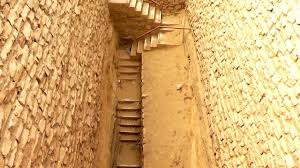
And what do we find at Sakkara in Egypt today in the very temple/pyramid complex of Djoser that was constructed by his trusted Imhotep? That’s right – granaries. With corn kernels still found found throughout the masonry. And the enigmatic joined columns in the great hall? (Egyptologists theorize that Imhotep constructed joined columns at the site because he didn’t trust them to stand on their own….uh huh. Sure.) Those “joined columns” create perfect stalls for people of Egypt and all nations to come and register with an agent of Joseph. (Just look at the wall art at the site itself.) You have a gate within a perimeter wall, the joined-columned hall, then the pathway to the granaries. Here’s how it worked:

A visiting family would come to Sakkara and pitch a tents outside the complex walls. As soon as you could, you would enter the hall and eventually be directed to one of the aforementioned stalls. You would request a certain amount of grain, pay the fee, and be handed a sack that corresponded to the amount of product ordered. You would then go out into the complex proper, hand the sack to an employee, who would descend the stairs to fill the sack with grain, and return it promptly to you.

There was only one rule you had to follow: get in, get your grain, and get out. One was only permitted to camp outside the complex for a couple of days – enough time for the transaction and to get out of dodge. Or Egypt in this case.

The importance of this practice? The rehearsal that would come later down the road? It may surprise you. It was…the family TENT. Also known as a Sukkah. A booth. A TABERNACLE. A temporary dwelling place of refuge. This important image was also symbolized by the tallit – the prayer shawl. It is also represented by the canopy used overhead during Jewish wedding ceremonies to this day.

It also translates as “manger” in the New Testament. Yep. The manger wasn’t a cave (accurately depicted in the recent Nativity short film produced by [The Church Of Jesus Christ of Latter-Day Saints]). It was a temporary tent set up to house the overflow of transient residents throughout Israel during the great census of Augustus.

And by the way, where do you think the word “Sakkara” comes from, anyway? That’s right. The Sukkah. Sakkara. Place of temporary booths, tabernacles. (The Egyptian and Hebrew languages are understandably intertwined, given Israel’s sojourn in that empire.)

Incidentally, Imhotep taught the Egyptians about mummification. Guess what Joseph requested before he died? That his people would mummify his body, preserving it for hundreds if not thousands of years. Why? Because he wanted his bones, and those of his father, to be removed from Egypt and carried back to the land of Abraham – back to Israel. A promise that would be kept. But that’s a different story – one that we’ll cover…next.

By the way – I noticed some years back that the reconstructed gates at Sakkara match EXACTLY the false doors etched into Egyptian tombs. These false doors were to allow the spirit of the dead individual inside the tomb to get out of the burial chamber to the FOOD OFFERING that had been left for him/her in a designated area without. So it looks like this incident caused the Egyptians themselves to institute a rehearsal of the event that changed a nation forever.

Sakkara. King Zoser´s step pyramid | The Pyramid of Djoser (… | Flickr
The Sakkara complex, built for Djoser by Imhotep
Sakkara Cairo Egypt Information, tours, prices, booking
The hallway of strange colmns that join to the walls with space for tables and ledgers
The Step Pyramid Complex in Saqqara Egypt. Designed by Imhotep who ...
The entrance to the granary area outside the great hall

Moses and the Passover

About 3,400 years ago, the Hebrews had been residing in Egypt for hundreds of years. (No, it could not have been earlier than the 18th dynasty – the Hyksos introduced the chariot to Egypt without question, so the 13th dynasty is an impossibility.) Given the fertile lands in the northern delta region by the grateful Pharaoh of Joseph’s time, the Israelites acted as shepherds and ranchers to the king’s flocks and herds. However, after some generations, the new Pharaoh (again – probably of the 18th dynasty) became uneasy about these long-term guests, given their prosperity and growing numbers, he opted to enslave them.

Along came a Hebrew man, raised by the daughter of Pharoah in her brother’s own palace, by the name of Moses; an Egyptian name given to him by his adoptive mother. The name is actually part of many Pharaoh’s names of the 18th dynasty. ThutMOSIS or ThutMOSE – “out of Thoth,” or “of Thoth” the god of wisdom. Thusmosis = disciple of Thoth. His Hebrew name being Moshe.

What does “Moses” mean in Hebrew? It means “to come out of.” Appropriate, given this man’s destiny to lead his people safely OUT OF Egypt. In fact, many believe his full name to be Hapi-Mosis, or “out of the Nile (god).” Makes perfect sense, given his discovery as a baby in the Nile river.

Let’s fast forward to Moses; showdown with Pharaoh. The latter, refusing his former-family member permission to take the Hebrews into the desert to perform a three-day worship ritual for their God, caused the 10 plagues to be unleashed on his kingdom. We’ll focus on the last of the plagues here.

Moshe warned the Pharaoh (probably Thutmosis III, who died the same day Israel crossed the Red Sea) of a horrific scene soon to come: the deaths of the eldest male member of each family throughout the land. How would the Israelites avoid the angel of death? By carefully following Moses’ instructions on the day before this impending doom: to slaughter a male lamb without blemish of the first year and smear his blood on the lintels and sides of their doorways. They were then to bake a loaf of unleavened bread and prepare the lamb meat with bitter herbs – this was not to be a particularly enjoyable meal. This DAY OF PREPARATION took place on the 14th day of the first month of spring.

On the 15th DAY, which reckoning of a new day began at sundown, the Israelites quarantined themselves indoors and partook of their bitter feast as the angel of death left them unharmed. As we know, the dreaded angel of death PASSED OVER those homes of residents who were obedient to the prophet’s instructions. This instituted the first Passover- another Holy Miqra; one to look back on Moses and forward to the saving blood of the Lamb/the Messiah. The thus the Holy Miqra/rehearsal for this ordinance, shadow picture, had completed its initiation phase.

Yes – each ordinance has several layers: an initiation phase, an intermediate phase (which can last thousands of years and be rehearsed thousands of times – like the sacrament or Eucharist), and its final completion phase. In fact – illustrating how this works is THE WHOLE POINT of these posts. But for n ow, we go back to Egypt.

Devastated by this awful curse, Pharaoh allowed the Hebrews to leave the kingdom for the three-day worship of their God in the desert. He never intended that they leave permanently. The Egyptians, tired of these troublesome Israelites, gave their gold, silver, brass, and other precious things to the Israelites to be offerings to the angry Unseen God Moshe kept warning Pharaoh about. (The gold would soon become a certain golden calf…to be eventually consumed and pooped out by the disobedient Israelites, the brass – the brazen lavar set outside the tabernacle complex.)

The children of Israel commenced their journey…with no intention of returning. But first they had important business. The gathering of Joseph and Jacob’s bones.

The exit from Egypt, or the Exodus, is recounted in the book of Exodus. These poeple, who had spent their entire lives for generations settled in the center for pagan worship and practices, made a vital pitstop at a place which translates as “Sukkoth,” a deriative of “Sukkah.” Most historians surmise this location is east of the Hebrew’s land in Goshen, which is in the northern fertile delta of Egypt. Is that where Joseph’s mummy rested, awaiting return to the land of his birth? Unlikely. Joseph was most probably buried a bit south at Sakkara – that Egyptian place named for the Sukkah (tabernacle) of dusty travelers seeking grain against the terrible 7 year famine hundreds of years before. There is an excellent chance that Sukkara is the actual place of the Biblical Sukkoth, the place where Israel’s descendants collected the remains of their progenitors.

When Pharaoh’s spies reported that the Hebrew slaves were not returning after the third day of supposed worship in the desert, the enraged ruler set out to force them to come back. Moshe had fled with the entire company of Hebrew slaves – and with Egyptian treasure to boot!

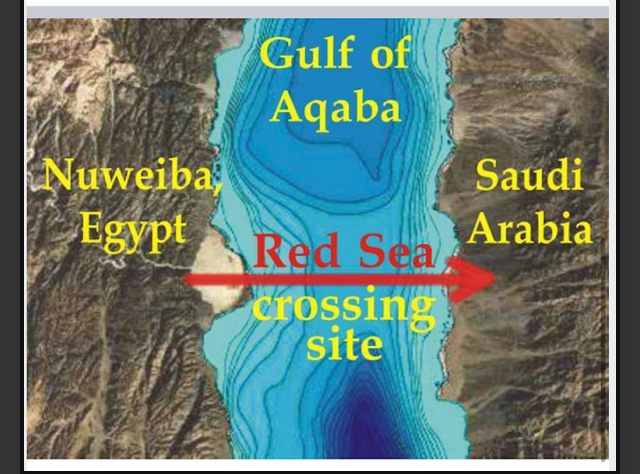
The Israelites miraculously crossed the Sini Peninsula in SEVEN DAYS, reaching the eastern arm of the Red Sea, the Sea of Aqaba, on the 21st day of the month, REMEMBER THESE BENCHMARK DAYS.

Most of us know the story of the parting of the Red Sea. In fact, the exact site of that crossing has been located But that’s another story. As is the sojourn of Moshe and his people in the wilderness. But we know that a tabernacle, a beautiful Sukkah, was constructed to house the Ark of the Covenant – the throne of Jehovah. Jehovah Himself tabernacled with His people, the family of Abraham.

Next…we’ll examine key points about the Hebrew calendar instituted by Jehovah to His people during King David’s reign and why understanding this keeping of time is VITAL to understanding Christ’s fulfillment of the Law of Moses.

By the way – though it has been sought by many for a hundred years, Imhotep’s mummy has never been found. I suspect that is never will be.

Yom Teruah: Feast of Trumpets

We’re now at about 3,000 years ago. Upon settling on Mount Moriah, the place where Jerusalem now sits, King David instituted ordinances, rehearsals, symbols of covenants made with Jehovah – shadow pictures of good things to come. Some were old – from the days of Moses – some were new and unique to the geography of Israel. Jerusalem was build NEXT to the highest peak where Isaac was nearly sacrificed – the place called Yehova Yehira. This highest peak was dug out, becoming a ditch/road just in front of the main gate of the city on the south side of Mount Moriah. A natural formation – a skull – loomed in the cliff above said road. (The meaning of Golgotha? “Place of the Skull”).

The calendar of the ancient Hebrews was not a fixed thing. It was a fluid reckoning, constantly dependent upon God in its cycles. No one knew in advance the hour nor the day each new year would begin, bu they did recognize the times and seasons – the Moedim; what we would loosely call “months”. An excellent example of this is the Biblical Rosh Hashana (rather than the modern Jewish new year, which was changed to the fall by Rabbinical Jews over 1500 years ago.) Let’s examine how the true Rosh Hashana “Head of the Year,” occuring on Aviv/Abib 1 worked:

At the approach of spring, the barley fields carefully planted months before would be constantly checked to see if they were “Abib” pronounced “Aviv”, this word basically means “ripened”. As the end of twelfth month of the year approached, the barley fields would either be found to be Abib or not. If it was NOT Abib, the leap month of Adar Bet would begin at the first sighting of the new moon and the new year would wait about four weeks. After the barley WAS declared Abib, the Rosh Hashana ” head of the Year” the new year day would officially begin, and the spring feasts were immenent.

Another unpredictable day of note was Yom Teruah: Feast or Day of Trumpets. The Israelites knew approximately when this day would come, recognizing the times and seasons, but would not know the exact day or hour of its arrival. At the new moon of the sixth month, the people were to wash their special garments, cleanse themselves, and prepare for the trumpets to sound in the feast on Tishri 1 (first day of the seventh month).

At the first sighting of the sliver of the new moon the men of the city would drop everything and run up to the closed gates at the Temple Mount (it being night – remember that days began at sundown). They would shout up to the Cohenim (priests) above, “We have sighted the new moon!” The Temple Gaurds at the gates would select two witnesses from among the men and summon a member of the Sanhedrin (elders of Israel) to interview these selected witnesses.

The elder, after interviewing the two witnesses, would verify the report and assemble all the elders into the Hall of Hewn Stone – which was directly adjacent to the Temple Mount complex – with access both inside the complex and outside it. The full compliment of Sanhedrin would ask an accounting of the witnessing of the new moon sighting, then confirm it before reporting such to the High Priest, or Cohen Gadol, who was waiting on the Temple Mount. After this confirmation by the Sanhedrin, the Cohen Gadol would shout down to the two witnesses waiting at the gates, “Come up hither!” Only this High Priest has the authority to open the temple gates. The two would ascend and give witness, the Cohen Gadol would then shout, “Sound the shofars (trumpets/ram’s horns)!”

At hearing the trumpet blast from the top of Mount Moriah, a sentry on the Mount of Olives to the east of the city would light a massive pile of wood. Other sentries all throughout the land would then light their own prepared pillars of fire, signaling to the next sentry that the sighting of the new moon had been confirmed. Soon, the entire nation of Israel would be alight with fire and the good news that a new season, the celebration had officially begun. Those who had neglected to prepare for the feast – either by not having washed, hung and stretched their garments, or if they had not washed themselves (Mikva)…it was too late. They had missed the summons.

Thus began the day of announcements, the Day of Trumpets: Yom Teruah. No one knew the exact day or hour it would begin, but they did recognize when to wait and watch, for the times and seasons had been explained to them.

And what happens just before the return of Christ? No more will He be the Suffering Servant , but the Lord of Hosts, sword-in-hand! As He sits up above, The Day of Trumpets shall be partially fulfilled when the two specially-selected slain witnesses, lying dead in the streets of Jerusalem for three days, will arise and shout up that their mission is fulfilled, their testimony complete. Thereupon, the Cohen Gadol, Yeshua the Messiah, keeper of the gate of heaven, shall call down, “come up hither!” They shall give their account, the Savior will command the trumps to blow, and He shall light the world with His radiance. Those who have neglected to prepare will not be a part of the feast of the Bridegroom.

This Holy Miqra will not be entirely complete until the end of the end, after Messiah’s millennial reign, when the trumpets shall blast once more and the Earth shall burn and become the sea of glass and fire. Now we see an example of how ordinances – shadow pictures of good things to come – shall be fulfilled. Will we recognize them? No one knows the day or the hour, but we have the tools to learn to recognize the times and the seasons, or rehearsals.

Next…I’ll expound more on the important rehearsals of the spring feasts which foreshadowed to Israel the coming of their Messiah as The Suffering Servant.

Side note: MANY important dates regarding the reorganization of The Church of Jesus Christ of Latter-Day Saints correspond to the ancient Hebrew Miqras, or rehearsals/feasts. Example? Moroni handed the Golden plates to Joseph Smith on the Day of Trumpets/Yom Teruah – 22 September 1827.

A Triumphal vs. Anticlimactic Entry

About 2,000 years ago, the barley had been proclaimed as “Aviv” (ripe); thus began another new year, full of promise. It was now Aviv 10 – then day of making a very important selection. The Cohen Gadol (High Priest) had to no reason to suspect that this year’s Feast of the Unleavened Bread, kicked off by the Passover, would be different than any other. Each year in the early morning on this day, since time immemorial in Israel, the Cohen Gadol would journey to the next hill south of Jerusalem to a little town called Bethlehem “House of Bread” to select their own lamb without blemish of the first year. THIS special lamb would be raised in an exclusive flock by the shepherds of Bethlehem – the town prophesied as the birthplace of the coming Messiah. Strange, seeing as how that town didn’t produce much of anything.

The Cohen Gadol would choose the most perfect lamb of the best flock, then head back north to the gates of Jerusalem where his priests, the Cohenim, would be awaiting him in silence. The entire path from the gate all the way up to the Temple Mount, nearly 3/4 of a mile, would be lined on both sides with Cohenim facing each other on opposite sides of the road, freshly cut palm fronds in-hand.

The people, in preparation of this exciting annual event, had all prepared their own palm fronds, which leaned against houses and sukkoth alike. The entire city looked to be a vast forest of greenery, given the swollen population at this time of year: over 100,000 people in fact. You see, there were three feasts a year that Israelite men-of-age were obligated to attend, and Passover was one of them. Many had already made the journey to Jerusalem in order to be sure to be there in time. They had all cleansed themselves in the Mikva pools at the south of the city, in preparation for the coming of the Messiah, as Moses had instructed. Just in case. All these faithful adherents to the feasts would wait silently in their homes for the usual signial…

Upon spying the Cohen Gadol with the specially selected lamb, the Cohenim would begin the shout, “Hosanna! Hosanna to the Son of David! Hosanna in the Highest! Blessed is He that comes in the name of the Lord!” Here was the signal! Those within earshot of this joyous cry would burst out into the streets, grab their fronds, and run to line up behind the Cohenim to wave their palms and take up the cry!

Meanwhile, on this particular year, as the lambs at Bethlehem were being scrutinized by the Cohen Gadol, Yeshua sat among loved ones eastward in Bethany at the home of Lazarus; he who had been recently raised from the dead by his beloved friend. These loving disciples anointed the Son of God with spikenard, not knowing that this was a foreshadowing of His impending death. Ever obedient to attending the feasts, the company soon sets out on the road traveling westward to Jerusalem – toward a group of disciples Yeshua had requested to gather at the gate. As the company approached the city Yeshua asked two disciples to find a young colt to be His steed: a male donkey that had never carried a man.

The Cohen Gadol, content in his choice of sacrificial lamb that morning, set out on the road southwest of Jerusalem. He was sure the lamb would pass the required four-day inspection up on the Temple Mount by the people in the city.

His journey nearly complete, the Cohen Gadol was just about to be spotted by his ever-vigilant priests looking intently to their right when suddenly he heard a commotion. A group of disciples of that bothersome Yeshua BenYosef were ruining everything! Seeing Yeshua approaching the city gates on the opposite side of the Cohen Gadol, those gathered morons began the shout, “Hosanna! Hosanna to the Son of David! Hosanna in the Highest! Blessed is He that comes in the name of the Lord!” To the High Priest’s horror, the shout was taken up by the Cohenim inside the gate, who had obviously mistaken the disciples’ voices for those of the confused priests just outside the walls!

As soon as the horrified priests were able to collect themselves, they frantically screamed at Yeshua to force His people to shut up! Make them shut up! Yeshua refused and explained that even if He did, the rocks themselves would take up the cry. This very moment, the one Israel had rehearsed for hundreds of years, was now fulfilled. The priests were dumbfounded – what heresy! Such a gross crime qualifies one for the death penalty!

Yeshua, followed by an enormous adoring entourage, entered the gate on the back of His donkey and disappeared from view. As the people shouted gleefully, leaving their house or Sukkah and taking up their palm fronds, they lined the streets with their countrymen, only to see that amazing Rabbi Yeshua BenYosef approaching on a donkey! “Yes, this feels right!” so many of them instinctively thought as they continued the Hosanna cry.

Down below, a befuddled and angry High Priest stood in a small crowd of sheepish Cohenim, unable to enter the gate for the crowds. A little lamb stood bleating at his side.

Next…we’ll examine the preparation of the Bikkurim “Feast of the First-Fruits,” and the inspection of The Lamb.

The Leaven is Taken Out by the Leaven

Shaken by his experience at the city gate on the morning of Aviv 10 (a Friday night at sundown to Saturday at sundown, by the pagan calendar), the Cohen Gadol tied up the specially chosen Passover lamb up on the Temple Mount for its required four-day inspection. He tried to ignore that irksome Yeshua BenYosef, who was also on the Temple Mount being grilled by Herodians, Pharisees, Kerites, and Sadducees alike. So far, no one could find fault in Him, despite the constant attempts to trip Him up. This Man was obviously guilty of heresy, but His adoring followers were too great in number to ignore. The attempt to arrest Yeshua BenYosef six months before at Sukkoth (the Feast of Tabernacles) ended in frustration, given Yeshua’s ability to mesmerize the Temple Guard sent to apprehend Him. Well, just as this spotless lamb on a leash would die after its inspection, so would this Man – no matter the cost.

Two nights later, the entire Sanhedrin met in secret to discuss this problem. They determined that the blasphemous disturber WOULD be arrested. But this time at night, in secret, and with assistance of Rome, who would be impervious to the supposed-Rabbi’s silver tongue. But it had to be soon! No capital punishment was to be carried out during the feasts; thank heavens Rome allowed conquered kingdoms to run things the way they liked…for the most part. All they needed now was someone close to Yeshua to betray Him. Perhaps that disillusioned disciple, His own treasurer, might be interested in a transaction of…personal interest?

Aviv 14 (a pagan Tuesday at sundown to Wednesday sundown), day of preparation. Beginning at sunset, the people gather for their usual evening repast – anticipating a good night’s sleep, then to busily go about preparing unleavened bread, gathering assorted necessities, procuring bitter herbs, and taking a male lamb without blemish of the first year up to the Cohen Gadol for him to slaughter on the Temple Mount.

Perhaps the most tedious law concerning Hag Matzot, the Feast of Unleavened Bread, was the requirement that each Hebrew family had to completely rid their house or Sukkah of ANY leavening. Only a complete and thorough inspection of all pantries and larders would do. Even things that had TOUCHED leavening of any kind had to go, for that was the rehearsal Jehovah had commanded through Moses the prophet on the eve of the first Passover: Pesach. The seven day Feast of Unleavened Bread was kicked off by the Pesach. There would be no leavening for the whole week, for this was the week the children of Israel fled Egypt, arriving at the Red Sea on the seventh day. The children of Israel had no time for leaven to rise then- they were to bake bread as quickly as possible for the Pesach, then leave Egypt forever.

This year, after sundown, Yeshua BenElohim Meshiach (Messiah) took advantage of the day of preparation by washing the feet of His chosen disciples. This loving act would not be permitted on a sabbath of high sabbath (ie. Pesach), so this night was perfect. Pesach would begin in less than 24 hours.

This extraordinary time was not only a time of fulfillment, but a time of instituting NEW rehearsals, feasts, ordinances. This night at the Last Supper Yeshua instituted the feast of the sacrament – a rehearsal of His soon-to-be broken body, with a promise of renewal: for Him and for any that follow Him. At the conclusion of this feast, Yeshua killed two birds with one stone; with a dipping in wine of the last piece of leavened bread in the home, He offered it to Judas as He dismissed him with an invitation to do what he was going to do. The disciples thought their treasurer was leaving to buy supplies for their feasts, but Yeshua knew better. Judas quickly scurried out. Another fulfillment, for the last piece of leaven left a now cleansed home from the last piece of leaven.

Shortly thereafter, Yeshua performed His Atonement of mankind in Gethsemane. Almost fifteen hundred years before, the children of Israel had broken the blood covenant they had made to Jehovah at the base of Mount Sinai almost as quickly as they had made it. They had been worthy of the death penalty ever since. Animal sacrifices meticulously observed, staved off the death penalty to the Israelite people for hundreds of years! It was now time for the death penalty to be paid by the only person who had the ability to save Israel – the other party in the blood covenant: the innocent party. By His blood, He would save the individuals on the Earth, but also Israel as a nation.

Another layer is seen in this event: the very first transgression occurred in a garden just as the Atonement of Jesus Christ occurred in a garden. The original broken covenant between Adam and God, was also paid at this time in Gethsemane by the innocent party. Blood as an offering had now officially been fulfilled. The new covenant would require a different sacrifice – the sacrifice of the will of man.

The Sanhedrin, true to their plans, had found an accomplice in Judas Iscariot just in the knick of time. Pesach had yet to begin. If Yeshua slipped form their fingers this time, they would have to wait until the next mandatory feast – Sukkoth in the fall!

Disappointed that this Messiah came as the suffering servant rather than the conquering hero, Judas decided to appease his extreme frustration by selling the Master for 30 silver coins. Judas showed up to Gethsemane with a betraying kiss, signalling to the Temple Guard that they had found their quarry. As the temple officers themselves looked on, the guard again balked at arresting this extraordinary Man, the Roman soldiers sent as a backup ensured the arrest was carried through. In the fracas, Malchus – the Cohen Gadol’s own servant, had an ear cut off by the firebrand Simon Peter. Simon and his fellows were shocked and outraged by the illegal presence of the temple officers at this arrest! Yeshua, silent about the Romans involved, gave a scathing rebuke to those members of the Sanhedrin present who hadn’t the courage to arrest Him on the Temple Mount in public.

Yeshua BenElohim, arrested on a Jewish warrant rather than a Roman, had His hands tightly bound – which was not lawful per Jewish custom unless they feared retaliation. Yeshua gave them no reason to fear this. Even so, His concern was for the poor Malchus. Yeshua healed the maimed ear and was then escorted to face a long night of scrutinty. The little Pascual lamb up on the Temple Mount was itself nearly finished being scrutinized. The next afternoon would find both to be innocent lambs for the slaughter.

Next…[in part 2], we learn exactly what the enormous significance of the Bikkurim/Feast of the First-Fruits was!

Finding “Spiritual Treasures” Part 2

In part 1 we discussed the first bit of President Nelson’s talk “Spiritual Treasures” including Section 25 of the Doctrine & Covenants which he asked us to study. I wanted to add just a little more to the discussion of this section before moving on.

In verse 1 of section 25 it says that all who receive the gospel (believe in Christ and enter in at the gate which is baptism) are sons and daughters of the kingdom. One of the footnotes for kingdom takes you to Daniel chapter 2. This chapter recounts the experience of Daniel, who was taken captive and carried away into Babylon, and his interpretation of king Nebuchadnezzar’s dream. The king dreamed of a great image in the figure of a man that was destroyed by a stone cut out of the mountain without hands.

Daniel then tells the king, “Thou art this ahead of gold.” Daniel goes on to reveal that each portion of the great image represents a kingdom that would arise sequentially after Babylon which would rule the earth (or at least the majority of the known world at that time). Each of these kingdoms beginning with Babylon would have a significant and lasting impact on all people of the earth. By looking throughout history and what influence remains of certain powerful nations today we can infer what these remaining kingdoms are.

  1. The head of gold = Babylon Empire. The ways of Babylon are often described in scripture as worldliness. Babylon’s influence has lasted millennium and still permeates our societies today.
  2. Breast and arms of silver = Medes’ and Persia Empire ruled by king Cyrus who played a significant role in the Jews returning to Jerusalem and the temple being rebuilt. It was this same temple to which Jesus would expound the scriptures and cast out the money changers.
  3. Belly of Brass = Macedonian and Grecian Empire. Philosophies of ancient Greece as well as its contribution to math, astronomy, medicine, literature, and architect have influenced nearly every civilization and nation since.

“And the fourth akingdom shall be strong as iron: forasmuch as iron breaketh in pieces and subdueth all things: and as iron that breaketh all these, shall it break in pieces and bruise” (Daniel 2:40).

4. Legs of Iron = Roman Empire. Often referred to as the Roman iron age, the Roman empire was at it’s height of power and influence over the nations when Christ walked the earth. It has influenced democratic governments, law, city planning and infrastructure, as well as philosophy and literature. Rome is also the capital of what would become the Roman Catholic church. The Catholic church has certainly fulfilled the prophecy of “subdueth all things” and “break in pieces and bruise” through centuries of oppression and violence against all other religions and cultures in the name of God.

“And whereas thou sawest the feet and toes, part of potters’ clay, and part of iron, the kingdom shall be divided; but there shall be in it of the strength of the airon, forasmuch as thou sawest the iron mixed with miry clay. And as the toes of the feet were part of iron, and part of clay, so the kingdom shall be partly strong, and partly broken. And whereas thou sawest iron mixed with miry clay, they shall mingle themselves with the seed of men: but they shall not cleave one to another, even as iron is not mixed with clay. And in the adays of these bkings shall the God of heaven cset up a dkingdom, which shall never be edestroyed: and the fkingdom shall not be left to other people, but it shall gbreak in pieces and hconsume all these ikingdoms, and it shall stand for ever” (Daniel 2:41-44).

5. Feet and Toes of Iron and Clay = World superpower nations + Roman Catholic church

The identity of the feet of iron mixed with clay has been debated among many Christian scholars. According to the Old Testament seminary manual on churchofjesuschrist.org it simply identifies the feet and toes of Nebuchadnezzar’s image as, “Kingdoms that arose after the fall of the Roman Empire”. It is not hard to determine nations that have qualified as world superpowers since the Roman Empire: Great Britain, the United States of America, and the Soviet Union could all qualify.

The mixture of iron and clay could also symbolize the significant influence that the Roman Catholic church (iron) continues to have as it is still very much mixed in with all these nations. “Forasmuch as thou sawest that the astone was cut out of the mountain without hands, and that it brake in pieces the iron, the brass, the clay, the silver, and the gold; the great God hath made bknown to the king what shall come to pass hereafter: and the dream is certain, and the interpretation thereof sure” (Daniel 2:45).

The stone cut out of the mountain without hands symbolizes the Church in the latter days, which is the kingdom of God on earth. And it has and will continue to roll forth until all nations as Daniel later sees in a vision of our day. He describes the destruction of worldly nations and empires before the coming of the Lord.

“I beheld till the thrones were cast down, and the Ancient of days did sit, whose garment was white as snow, and the hair of his head like the pure wool: his throne was like the fiery flame, and his wheels as burning fire.”(Daniel 7:9, emphasis added).

The Lord through His prophet and all the prophets who have ever lived are asking you and me to leave the world behind! Leave Babylon. Leave behind the philosophies and accolades of this world, because they won’t stand when God’s work and glory rolls forth!

Now, that was a long detour just from one footnote! This is how most of my study of President Nelson’s talk has been. I have pages and pages of notes, quotes, and personal revelation that came as I read just this short section of D&C 25.

The prophet described what it means to walk away from the world.

Part of this endeavor will require you to put aside many things of this world. Sometimes we speak almost casually about walking away from the world with its contention, pervasive temptations, and false philosophies. But truly doing so requires you to examine your life meticulously and regularly. As you do so, the Holy Ghost will prompt you about what is no longer needful, what is no longer worthy of your time and energy.

As you shift your focus away from worldly distractions, some things that seem important to you now will recede in priority. You will need to say no to some things, even though they may seem harmless. As you embark upon and continue this lifelong process of consecrating your life to the Lord, the changes in your perspective, feelings, and spiritual strength will amaze you!

Pray and ask the Father what things in your life would fit into this category. I promise if you examine your life meticulously He will let you know what you need to change! Just be prepared to do it when that inspiration comes. If you feel overwhelmed, like I did, make a list of your spiritual gifts. Some of them may even be named in your patriarchal blessing.

This profoundly inspirational section of the Doctrine and Covenants we’ve reviewed so far was given to Emma Smith and as I read this and the words of this beloved prophet I felt so loved! Loved by my Heavenly Parent’s, my Savior, and His prophet.

I entreat you to study prayerfully all the truths you can find about priesthood power. You might begin with Doctrine and Covenants sections 84 and 107. Those sections will lead you to other passages. The scriptures and teachings by modern prophets, seers, and revelators are filled with these truths. As your understanding increases and as you exercise faith in the Lord and His priesthood power, your ability to draw upon this spiritual treasure that the Lord has made available will increase. As you do so, you will find yourselves better able to help create eternal families that are united, sealed in the temple of the Lord, and full of love for our Heavenly Father and for Jesus Christ.

Yay! Let’s dive in to D&C 84 and find some more treasures….

2 Yea, the word of the Lord concerning his church, established in the last days for the arestoration of his people, as he has spoken by the mouth of his bprophets, and for the cgathering of his dsaints to stand upon eMount Zion, which shall be the city of fNew Jerusalem.

Which city shall be abuilt, beginning at the btemple lot, which is appointed by the finger of the Lord, in the western boundaries of the State of Missouri, and cdedicated by the hand of Joseph Smith, Jun., and others with whom the Lord was well pleased.

Verily this is the word of the Lord, that the city aNew Jerusalem shall be built by the gathering of the saints, beginning at this place, even the place of the temple, which btemple shall be creared in this dgeneration.

For verily this generation shall not all apass away until an bhouse shall be built unto the Lord, and a ccloud shall rest upon it, which cloud shall be even the dglory of the Lord, which shall fill the house.

There it is again! The temple being referenced isn’t any temple, it is the temple in Zion, that is, Jackson County, Missouri. (3 Nephi 20:2221:23–25Ether 13:3–4, 6–8)

The big question that I have to ask then is…how long is a generation? If the New Jerusalem was promised to be built by the gathering saints in this generation, then knowing how long a generation is according to the Lord’s time table seems important.

According the significance of numbers associated with the Hebrew religious calendar and holy days it could be interpreted as either 40, 70, or 100 years. Well, that’s disappointing because obviously the New Jerusalem temple was not built during that generation according to the time frame that we understand. We also learn that in D&C 124:49-54 that the saints of that generation were excused from building the temple because mobs prevented it and the saints weren’t keeping the commandments like they should.

“There have been various interpretations of the meaning of a generation. It is held by some that a generation is one hundred years; by others that it is one hundred and twenty years; by others that a generation as expressed in this and other scriptures has reference to a period of time which is indefinite. The Savior said: ‘An evil and adulterous generation seeketh after a sign.’ This did not have reference to a period of years, but to a period of wickedness. A generation may mean the time of this present dispensation.”

Joseph Fielding Smith (Church History and Modern Revelation, 1:337.)

That’s comforting. But, let’s read more closely. “Which temple shall be reared in this generation”. I thought a little more about the definition of the word “rear”. Yes, it does mean to build something, however it also means to bring to maturity or self-sufficiency usually through nurturing care. That has certainly been true for the Saints as they were first gathered to the Rocky Mountains to avoid persecution and the extermination order, as well as the what the prophets throughout this dispensation have been trying to do with the members of the church – encourage spiritual maturity and self-sufficiency through their nurturing care.

“We ought to have the building up of Zion as our greatest object. When wars come, we shall have to flee to Zion. The cry is to make haste. The last revelation says, Ye shall not have time to have gone over the earth, until these things come. It will come as did the cholera, war, fires, and earthquakes; one pestilence after another, until the Ancient of Days comes, then judgment will be given to the Saints. … The time is soon coming, when no man will have any peace but in Zion and her stakes.”

Joseph Smith, (Teachings, pp. 160–61.)

Zion is the opposite of the world, or spiritual Babylon. In preparation for the Millennium, therefore, Babylon must be destroyed. The cry to all people is, “Go ye out from among the nations, even from Babylon, from the midst of wickedness, which is spiritual Babylon. … and he that goeth, let him not look back lest sudden destruction shall come upon him.” (D&C 133:14–15.) When one flees Babylon, one gathers to Zion and her stakes. (https://www.churchofjesuschrist.org/manual/doctrine-and-covenants-student-manual/section-84-the-oath-and-covenant-of-the-priesthood?lang=eng)

Next, D&C 84 outlines the Priesthood lineage from Adam to Moses and Aaron.

17 Which apriesthood bcontinueth in the church of God in all generations, and is without cbeginning of days or end of years.

19 And this greater apriesthood administereth the gospel and holdeth the bkey of the cmysteries of the kingdom, even the key of the dknowledge of God.

20 Therefore, in the aordinances thereof, the power of bgodliness is manifest.

The same priesthood that was conferred upon Adam is the same passed on to all who are worthy and able to receive it. Joseph Fielding Smith said, “It is impossible for men to obtain the knowledge or the mysteries of the kingdom or the knowledge of God, without the authority of the Priesthood.”

How then do women obtain such knowledge and mysteries of the kingdom of God?

“You must not misunderstand what the Lord meant when Adam was told he was to have a helpmeet. A helpmeet is a companion suited to or equal to us. We walk side by side with a helpmeet, not one before or behind the other. A helpmeet results in an absolute equal partnership between a husband and a wife. Eve was to be equal to Adam as a husband and wife are to be equal to each other.”

Earl C. Tingey, “The Simple Truths from HeavenóThe Lord’s Pattern. CES Fireside for Young Adults, January 13, 2008, Brigham Young University, http://lds.org/library/display/0,4945,538-1-4399-1,00.html

According to Valerie Hudson in a talk entitled “The Two Trees” given during a Fair Mormon conference, described complimentary priesthood ordinances beginning with mother Eve.

She stood on the threshold between Home and the Great Journey. The Parents had decreed that if none of their daughters consented to the Great Journey, it would not occur. Those who would bear the responsibility of bringing all of the children through the doorway, and risk their life in this task, had the right to make that decision. She weighed it all in her heart and her mind, counted the cost to all of the daughters who would come.

The First Tree was the Tree of Knowledge of Good and Evil and it was Eve and all her daughters since who have had stewardship over it. It is the woman, the mother, who brings the sons and daughters of God into this mortal probationary sphere. It is her sacred privilege to do so. The Second Tree is the Tree of Life. This tree is the door from this mortal realm back to our heavenly home where our Heavenly Parent’s dwell. The man and the priesthood which he holds has stewardship over it.

[The] priesthood is not some extra given to men and denied women. Priesthood is a man’s apprenticeship to become a heavenly father, and I believe that women have their own apprenticeship to become like their heavenly mother. The ordinance—and they are ordinances—of body and of agency—pregnancy, childbirth, lactation—the spiritual ordinances of the First Tree are not less powerful or spiritual than the ordinances of the Second Tree. Women have their own godly power. 

Valerie Hudson (The Two Trees, https://www.fairmormon.org/conference/august-2010/the-two-trees#en3)

President Nelson clarified this further when he said, “…in the holy temple you are authorized to perform and officiate in priesthood ordinances every time you attend. Your temple endowment prepares you to do so.

If you are endowed but not currently married to a man who bears the priesthood and someone says to you, “I’m sorry you don’t have the priesthood in your home,” please understand that that statement is incorrect. You may not have a priesthood bearer in your home, but you have received and made sacred covenants with God in His temple. From those covenants flows an endowment of His priesthood power upon you. And remember, if your husband should die, you would preside in your home.”

22 For without this (the ordinances thereof, and the aauthority of the priesthood, the power of godliness) no aman can see the face of God, even the Father, and live.

The footnote to man in this verse leads you to D&C 67:11 “For no man has seen God at any time in the flesh, except quickened by the Spirit of God.” To be quickened by the spirit of God is “to make alive, to resurrect, or to change a person so that he can be in the presence of God” (Guide to the Scriptures, Quicken). It is to be translated or transfigured. Anyone who has seen the glory of God in the flesh has had this quickening take place.

This is the priesthood privileges which we as faithful woman and men alike have been promised – to come into the presence of the Lord. “And the saints that are upon the earth, who are alive, shall be quickened and be caught up to meet him” (D&C 88:96).

This is what Moses desired for his people, that they might repent, be humble, and become pure so that they could see God as Moses had, face to face.

23 Now this aMoses plainly taught to the children of Israel in the wilderness, and sought diligently to bsanctify his people that they might cbehold the face of God;

24 But they ahardened their hearts and could not endure his bpresence; therefore, the Lord in his cwrath, for his danger was kindled against them, swore that they should not eenter into his rest while in the wilderness, which rest is the fulness of his glory.

25 Therefore, he took aMoses out of their midst, and the Holy bPriesthood also;

26 And the lesser apriesthood continued, which priesthood holdeth the bkey of the cministering of angels and the dpreparatory gospel;

The Children of Israel, like the early Saints were not spiritually prepared or mature enough for all that the Lord wanted for them.

Are we prepared? Am I?

The Children of Israel were given a lesser law because they were unable to live a higher one. Likewise, God’s church in the latter-days could not live a higher law and establish the New Jerusalem. Are we ready now?

31 Therefore, as I said aconcerning the sons of Moses—for the sons of Moses and also the sons of Aaron shall offer an acceptable boffering and sacrifice in the house of the Lord, which house shall be built unto the Lord in this generation, upon the consecrated cspot as I have appointed—

32 And the sons of Moses and of Aaron shall be filled with the aglory of the Lord, upon bMount Zion in the Lord’s house, whose sons are ye; and also many whom I have called and sent forth to build up my cchurch.

33 For whoso is afaithful unto the obtaining these two bpriesthoods of which I have spoken, and the cmagnifying their calling, are dsanctified by the Spirit unto the erenewing of their bodies.

34 They become the asons of Moses and of Aaron and the bseed of cAbraham, and the church and kingdom, and the delect of God.

According to D&C 128:24, the acceptable offering and sacrifice which must be made unto the Lord in this “spot” is indeed Mount Zion, or the temple at New Jerusalem. What is the offering and sacrifice? It is the greatest work we can be engaged in, and that is to invite everyone on both sides of the veil to come unto Christ. It is the work for the living and the dead in the temple.

“Behold, the great day of the Lord is at hand; and who can abide the day of his coming, and who can stand when he appeareth? For he is like a refiner’s fire, and like fuller’s soap; and he shall sit as a refiner and purifier of silver, and he shall purify the sons of Levi, and purge them as gold and silver, that they may offer unto the Lord an offering in righteousness. Let us, therefore, as a church and a people, and as Latter-day Saints, offer unto the Lord an offering in righteousness; and let us present in his holy temple, when it is finished, a book containing the records of our dead, which shall be worthy of all acceptation” (D&C 128:24).

As of March 25, 2020 the daily sacrifice was taken away when all the temples world wide were closed. This was prophesied of in Daniel 11:31. Daniel also says that this is the beginning of the Abomination of Desolation by none other than the Anti-Christ. So, I guess we’ll see what happens next in real time. Luckily, we are also assured that we need not fear.

33 For whoso is afaithful unto the obtaining these two bpriesthoods of which I have spoken, and the cmagnifying their calling, are dsanctified by the Spirit unto the erenewing of their bodies.

34 They become the asons of Moses and of Aaron and the bseed of cAbraham, and the church and kingdom, and the delect of God.

“Who are the sons of Aaron and Levi today? They are, by virtue of the blessings of the Almighty, those who are ordained by those who hold the authority to officiate in the offices of the priesthood. It is written that those so ordained become the sons of Moses and Aaron.” (Smith, Doctrines of Salvation, 3:93.)

35 And also all they who receive this priesthood areceive me, saith the Lord;

36 For he that receiveth my servants areceiveth me;

37 And he that areceiveth me receiveth my Father;

38 And he that receiveth my Father receiveth my Father’s akingdom; therefore ball that my Father hath shall be given unto him.

In the temples both men and woman, sons and daughters of God are promised the blessings of priesthood power, angels to attend us, and the heavens to be opened. All that our Heavenly Parent’s have we may also obtain through our faithfulness to the covenants which we have made. But there is a warning in the footnote to “the elect of God” as well as in the following verses that we must heed.

“For there shall arise false Christs, and false prophets, and shall shew great signs and wonders; insomuch that, if it were possible, they shall deceive the very elect” (Matt. 24:24).

“And except that the Lord had shortened those days, no flesh should be saved: but for the elect’s sake, whom he hath chosen, he hath shortened the days” (Mark 13:20).

The days of tribulation, when false Christs and false prophets show great signs and wonders intent on deception, these days will be shortened so that not all the elect (those who have made covenants) will be deceived. But, we are also warned that those who willfully break covenants “after he hath received it, and altogether turneth therefrom, shall bnot have forgiveness of sins in this world nor in the world to come” (D&C 84:41).

President Marion G. Romney said of this verse: “Now, I do not think this means that all who fail to magnify their callings in the priesthood will have committed the unpardonable sin, but I do think that priesthood bearers who have entered into the covenants that we enter into—in the waters of baptism, in connection with the law of tithing, the Word of Wisdom, and the many other covenants we make—and then refuse to live up to these covenants will stand in jeopardy of losing the promise of eternal life.” (In Conference Report, Apr. 1972, p. 112; or Ensign, July 1972, p. 99.)

President Nelson gave a similar warning specific to woman of the covenant, or in other words elect ladies.

From the dawning of time, women have been blessed with a unique moral compass—the ability to distinguish right from wrong. This gift is enhanced in those who make and keep covenants. And it diminishes in those who willfully ignore the commandments of God.

I hasten to add that I do not absolve men in any way from God’s requirement for them also to distinguish between right and wrong. But my dear sisters, your ability to discern truth from error, to be society’s guardians of morality, is crucial in these latter days. And we depend upon you to teach others to do likewise. Let me be very clear about this: if the world loses the moral rectitude of its women, the world will never recover.

We Latter-day Saints are not of the world; we are of covenant Israel. We are called to prepare a people for the Second Coming of the Lord.

That is what our generation must do! Be prepared for the Second Coming of the Lord! But as we continue to read the next dozen verses of D&C 84 we are reminded that we have to do better. We have to repent and not have our minds darkened with unbelief because we took lightly the things of God (verse 54). We are commanded to “remain bsteadfast in your minds in csolemnity and the spirit of prayer, in bearing dtestimony to all the world of those things which are communicated unto you” (verse 61).

As we share the gospel message in whatever capacity we are able, whether as a full time missionary or not, we will be blessed in our efforts. Then, as if in response to me thinking about all the missionaries being brought home, these next verses seemed to read like a news headline about COVID19 happening today.

97 And aplagues shall go forth, and they shall not be taken from the earth until I have completed my work, which shall be cut bshort in righteousness—

98 Until all shall aknow me, who remain, even from the least unto the greatest, and shall be filled with the knowledge of the Lord, and shall bsee eye to eye, and shall lift up their voice, and with the voice together csing this new song…

Read the next verses and try to imagine yourself standing with a host of Saints in Zion with Jesus Christ personally among us. It is almost overwhelming to think of singing praises to my Redeemer, when Satan is bound, and justice, peace, mercy, and His grace abound! It makes you wonder if we will see verses 99-102 put to music in the new hymn books being prepared. How else will we be able to sing it together if we haven’t practiced first?

It is interesting that we go from this joyous thought back to our more immediate present by the next few verses talking again about warning the people of the abomination of desolation. I’m sure the abomination which makes desolate is similar to what ancient Israel did, to sacrifice children to dumb idols. It may be no coincidence that in verse 114-115 that New York, Albany, and Boston are specifically warned that their cities will be left desolate. In our day these cities have embraced and legalized the practice of abortion, which is just the modern form of child sacrifice to the idols of “choice” and “self”.

These cities were the subject of another prophet’s testimony. Elder Wilford Woodruff addressed a conference in Logan, Utah, on 22 August 1863. Speaking directly to the youth in attendance, he declared: “‘Now, my young friends, I wish you to remember these scenes you are witnessing during the visit of President Young and his brethren. Yea, my young friends, treasure up the teachings and sayings of these prophets and apostles as precious treasure while they are living men, and do not wait until they are dead. A few days and President Young and his brethren, the prophets and apostles and Brothers Benson and Maughan, will be in the spirit world. You should never forget this visitation. You are to become men and women, fathers and mothers; yea, the day will come, after your fathers, and these prophets and apostles are dead, you will have the privilege of going into the towers of a glorious Temple built unto the name of the Most High (pointing in the direction of the bench), east of us upon the Logan bench; and while you stand in the towers of the Temple and your eyes survey this glorious valley filled with cities and villages, occupied by tens of thousands of Latter-day Saints, you will then call to mind this visitation of President Young and his company. You will say: That was in the days when Presidents Benson and Maughan presided over us; that was before New York was destroyed by an earthquake; it was before Boston was swept into the sea, by the sea heaving itself beyond its bounds; it was before Albany was destroyed by fire; yea, at that time you will remember the scenes of this day. Treasure them up and forget them not.’ President Young followed and said: ‘What Brother Woodruff has said is revelation and will be fulfilled.’” (In Lundwall, Temples of the Most High, pp. 97–98.)

118 For, with you saith the Lord aAlmighty, I will brend their ckingdoms; I will not only dshake the earth, but the estarry heavens shall tremble.

119 For I, the Lord, have put forth my hand to exert the apowers of heaven; ye cannot see it now, yet a blittle while and ye shall see it, and know that I am, and that cI will dcome and reign with my people.

The reality that Christ will indeed come and reign with His people has been the theme throughout this study so far.

In part 3 we’ll cover Section 107 and see what more we learn.

Finding “Spiritual Treasures” Part 1

In the Women’s session of General Conference October 2019, President Russell M. Nelson addressed the sisters about Spiritual Treasures. He spoke of the events surrounding the restoration of the gospel through the prophet Joseph Smith and the power of the priesthood available to covenant-keeping men and women alike.

I entreat you to study prayerfully all the truths you can find about priesthood power. You might begin with Doctrine and Covenants sections 84 and 107. Those sections will lead you to other passages. The scriptures and teachings by modern prophets, seers, and revelators are filled with these truths. As your understanding increases and as you exercise faith in the Lord and His priesthood power, your ability to draw upon this spiritual treasure that the Lord has made available will increase. As you do so, you will find yourselves better able to help create eternal families that are united, sealed in the temple of the Lord, and full of love for our Heavenly Father and for Jesus Christ.

I determined to do just as our prophet asked. I have spent hours reading through this inspired talk and the events which he spoke of during the restoration, reading every section given, and following every footnote. Here’s are my notes of the spiritual treasures I have found as I’ve done so and hope they edify and inspire you as they have me.

Everything that happened in this area [of Harmony, Pennsylvania] has profound implications for your lives. The restoration of the priesthood, along with the Lord’s counsel to Emma, can guide and bless each of you. How I yearn for you to understand that the restoration of the priesthood is just as relevant to you as a woman as it is to any man. Because the Melchizedek Priesthood has been restored, both covenant-keeping women and men have access to “all the spiritual blessings of the church”2 or, we might say, to all the spiritual treasures the Lord has for His children.

What happened in Harmony?

  • May 15, 1829 John the Baptist appeared and conferred the Aaronic priesthood to Joseph Smith and Oliver Cowdery. “Upon you my fellow servants, in the name of Messiah, I confer the Priesthood of Aaron, which holds the keys of the ministering of angels, and of the gospel of repentance, and of baptism by immersion for the remission of sins; and this shall never be taken again from the earth until the sons of Levi do offer again an offering unto the Lord in righteousness.” (Joseph Smith—History 1:68-69; Doctrine and Covenants 13.)
  • It was there that the Apostles Peter, James, and John appeared to restore the Melchizedek Priesthood. “The power and authority of the higher, or Melchizedek Priesthood, is to hold the akeys of all the spiritual blessings of the church” (D&C 107:18).
  • It was in Harmony that Emma Hale Smith served as her husband’s first scribe while the Prophet translated the Book of Mormon. Joseph Smith was told by the angel Moroni that he needed to bring the “right person” with him to retrieve the plates. Early on Joseph felt it should have been his eldest brother Alvin, but when Alvin passed away he was left to wonder who it would be. Joseph was then led to work for Mr. Hale who’s daughter would become not only Joseph’s loving wife, but “arguably more intimately involved in the coming forth of the Book of Mormon than any person besides Joseph” (Amy Easton-Flake and Rachel Cope, “A Multiplicity of Witnesses: Women and the Translation Process,” in The Coming Forth of the Book of Mormon: A Marvelous Work and a Wonder, Deseret Book and Religious Studies Center, Brigham Young University, 2015), 143.)
  • It was also in Harmony that Joseph received a revelation manifesting the Lord’s will to Emma.

So, I invite you to study prayerfully section 25 of the Doctrine and Covenants and discover what the Holy Ghost will teach you. Your personal spiritual endeavor will bring you joy as you gain, understand, and use the power with which you have been endowed.

(I have added my own thoughts of each footnote in the parenthesis in Italics and bold.)

Hearken unto the voice of the Lord your God, while I speak unto you, Emma Smith (insert your name), my daughter; for verily I say unto you, all those who areceive my gospel are sons and daughters in my bkingdom. (“In its fulness, the gospel includes all the doctrines, principles, laws, ordinances, and covenants necessary for us to be exalted in the celestial kingdom. The Savior has promised that if we endure to the end, faithfully living the gospel, He will hold us guiltless before the Father at the Final Judgment”(see 3 Nephi 27:16)(Gospel Overview, churchofjesuschrist.org).

A revelation I give unto you concerning my will; and if thou art faithful and awalk in the paths of bvirtue before me, I will preserve thy life, and thou shalt receive an cinheritance in Zion. (“Virtue is a prerequisite to entering the Lord’s holy temples and to receiving the Spirit’s guidance. Virtue “is a pattern of thought and behavior based on high moral standards.” It encompasses chastity and moral purity…It is the accumulation of thousands of small decisions and actions.” (gospel topics, Virtue). Now, if we walk in virtue then we are promised that our lives will be preserved and we will receive an inheritance in Zion. “Saying: I, the Lord, will make known unto you what I will that ye shall do from this time until the next conference, which shall be held in Missouri, upon the land which I will consecrate unto my people, which are a remnant of Jacob, and those who are heirs according to the covenant. And it shall also, inasmuch as they are faithful, be made known unto them the land of your inheritance. And thus, even as I have said, if ye are faithful ye shall assemble yourselves together to rejoice upon the land of Missouri, which is the land of your inheritance, which is now the land of your enemies” (D&C 52: 2,5,42). Wow! Okay, so from this time that president Nelson gave this talk in October 2019 until the next general conference something significant may be happening that points to our inheritance in the New Jeruselum in the land of Missouri which has been consecrated unto the Lord’s people who are heirs according to the covenant!)

Behold, thy asins are forgiven thee, and thou art an belect clady (chosen or set apart) , whom I have dcalled. (The Lord said, “For many are calledbut few are chosen.” 7 We are called when hands are laid upon our heads and we are given the priesthood, but we are not chosen until we have demonstrated to God our righteousness, our faithfulness, and our commitment” James E. Faust; Called and Chosen, 2005).

aMurmur not because of the bthings (knowledge) which thou hast not seen, for they are cwithheld from thee and from the world, (“But their eyes were holden that they should not know him” Luke 24: 16) which is wisdom in me in a time to come. (“Perhaps when we murmur we are unconsciously complaining over not being able to cut a special deal with the Lord. We want full blessings but without full obedience to the laws upon which those blessings are predicated. For instance, some murmurers seem to hope to reshape the Church to their liking by virtue of their murmuring. But why would one want to belong to a church that he could remake in his own image, when it is the Lord’s image that we should come to have in our countenances? (See Alma 5:19.)The doctrines are His, brothers and sisters, not ours. The power is His to delegate, not ours to manipulate!” (Neal A. Maxwell; Murmur Not, Oct. 1989).

And the office of thy calling shall be for a acomfort (compassion) unto my servant, Joseph Smith, Jun., thy bhusband, in his cafflictions (adversity, chastening, persecution, and sorrow) with consoling words, in the spirit of dmeekness (gentleness).

And thou shalt go with him at the time of his going, and be unto him for a scribe, while there is no one to be a scribe for him, that I may send my servant, Oliver Cowdery, whithersoever I will.

And thou shalt be aordained (or set apart) under his hand to expound scriptures, and to exhort the church, according as it shall be given thee by my bSpirit (spiritual gifts are given through the gift of the Holy Ghost; Holy Spirit, or the Light of Christ).

For he shall lay his ahands (administration through the authority of the priesthood) upon thee, and thou shalt receive the Holy Ghost, and thy time shall be given to writing, and to learning much.

And thou needest not fear, for thy ahusband shall support thee in the church; for unto them is his bcalling, that all things might be crevealed unto them, whatsoever I will, according to their faith. (The Proclamation on the Family states, “… that marriage between a man and a woman is ordained of God and that the family is central to the Creator’s plan for the eternal destiny of His children.” In April 2006, then Elder Russell M. Nelson said, “Marriage is the foundry for social order, the fountain of virtue, and the foundation for eternal exaltation. Marriage has been divinely designated as an eternal and everlasting covenant.7 Marriage is sanctified when it is cherished and honored in holiness. That union is not merely between husband and wife; it embraces a partnership with God.8 “Husband and wife have a solemn responsibility to love and care for each other.”9 Children born of that marital union are “an heritage of the Lord.”10 Marriage is but the beginning bud of family life; parenthood is its flower. And that bouquet becomes even more beautiful when graced with grandchildren. Families may become as eternal as the kingdom of God itself.11 Marriage is both a commandment and an exalting principle of the gospel.” (Nurturing Marriage, GC April 2006).

10 And verily I say unto thee that thou shalt lay aside the athings of this bworld, and cseek for the things of a dbetter. (Do not covet, or greedily long for things that will not last and are not what your Heavenly Parents and Savior want for you. “Wherefore come out from among them, and be ye separate, saith the Lord, and touch not the unclean thing; and I will receive you,” (2 Cor. 6:17). We must seek for a more eternal reward. For the Lord has said, “I am thy shield, and thy exceeding great reward.” (Gen. 15:1).

11 And it shall be given thee, also, to make a selection of asacred bhymns, as it shall be given thee, which is pleasing unto me, to be had in my church.

12 For my soul adelighteth in the bsong of the cheart; yea, the dsong of the righteous is a prayer unto me, and it shall be answered with a blessing upon their heads. (“Speaking to yourselves in psalms and hymns and spiritual songs, singing and making melody in your heart to the Lord; Giving thanks always for all things unto God and the Father in the name of our Lord Jesus Christ;” Eph. 5:19-20).

13 Wherefore, alift up thy heart and brejoice, and cleave unto the covenants which thou hast made. (The word cleave has two contradictory definitions: on the one hand cleave means “to separate (something) into distinct parts and especially into groups having divergent views”. While on the other hand is also means, “to adhere closely; stick; cling. to remain faithful”. We cleave unto our covenants as we separate ourselves from sin, divergent views which would lead us away from the covenant path, and through continual repentance becoming distinct from the world. While simultaneously adhering closely and remaining wholly faithful to the Lord and His ways. This is truly something to “lift up thy heart and rejoice over”).

14 Continue in the spirit of meekness, and beware of apride. Let thy soul delight in thy bhusband, and the cglory which shall come upon him. (“Meekness is a defining attribute of the Redeemer and is distinguished by righteous responsiveness, willing submissiveness, and strong self-restraint”(David A. Bednar; Meek and Lowly of Heart, GC, April 2018). Pride, then, is the antithesis of meekness. Emma was commanded to delight in her husband and the glory which shall come upon him. This glory is not just for him, but is eternally tied to and dependent upon her as well. Joseph’s glory is that of celestial exultation but not without his eternal companion. “In order to obtain the highest degree in the celestial kingdom, a man and a woman must enter into the new and everlasting covenant of marriage” (see D&C 131:2–3).

15 Keep my commandments continually, and a acrown of brighteousness thou shalt receive. And except thou do this, where I am you ccannot come. (Emma, and all those who make and keep sacred covenants and ordinances of the priesthood, will receive exaltation. If covenants are not kept and the sanctifying power of the atonement used, where the Lord is we cannot be.)

16 And verily, verily, I say unto you, that this is my avoice unto all. Amen. (This applies to everyone!!!)

Every woman and every man who makes covenants with God and keeps those covenants, and who participates worthily in priesthood ordinances, has direct access to the power of God. Those who are endowed in the house of the Lord receive a gift of God’s priesthood power by virtue of their covenant, along with a gift of knowledge to know how to draw upon that power.

The heavens are just as open to women who are endowed with God’s power flowing from their priesthood covenants as they are to men who bear the priesthood. I pray that truth will register upon each of your hearts because I believe it will change your life. Sisters, you have the right to draw liberally upon the Savior’s power to help your family and others you love.

Now, you might be saying to yourself, “This sounds wonderful, but how do I do it? How do I draw the Savior’s power into my life?”

Part of this endeavor will require you to put aside many things of this world. Sometimes we speak almost casually about walking away from the world with its contention, pervasive temptations, and false philosophies. But truly doing so requires you to examine your life meticulously and regularly. As you do so, the Holy Ghost will prompt you about what is no longer needful, what is no longer worthy of your time and energy.

As you shift your focus away from worldly distractions, some things that seem important to you now will recede in priority. You will need to say no to some things, even though they may seem harmless. As you embark upon and continue this lifelong process of consecrating your life to the Lord, the changes in your perspective, feelings, and spiritual strength will amaze you!

President Nelson then gives a warning about those who would undermine, doubt, or minimize your spiritual capacity and the efforts of the adversary. I hope that you’ll read the entirety of this incredible talk, but for the sake of space we’ll skip to the prophet’s final earnest request.

I entreat you to study prayerfully all the truths you can find about priesthood power. You might begin with Doctrine and Covenants sections 84 and 107. Those sections will lead you to other passages. The scriptures and teachings by modern prophets, seers, and revelators are filled with these truths. As your understanding increases and as you exercise faith in the Lord and His priesthood power, your ability to draw upon this spiritual treasure that the Lord has made available will increase. As you do so, you will find yourselves better able to help create eternal families that are united, sealed in the temple of the Lord, and full of love for our Heavenly Father and for Jesus Christ.

Read Part 2 of Finding “Spiritual Treasures” as we go through these next two exciting sections.

Design a site like this with WordPress.com
Get started